Inbound Setup
Setting up the CargoWise eAdaptor Inbound Service for receiving data from third party services.
eAdaptor Next
Navigate to Maintain > EDI Messaging > EDI Client Details in CargoWise and click New to add access for a client to the eAdaptor Inbound Service.
Two authentication methods are available for the eAdaptor Inbound Service:
- OAuth Authentication
- Basic Authentication - available to on-premise CargoWise instances
Configure Inbound OAuth
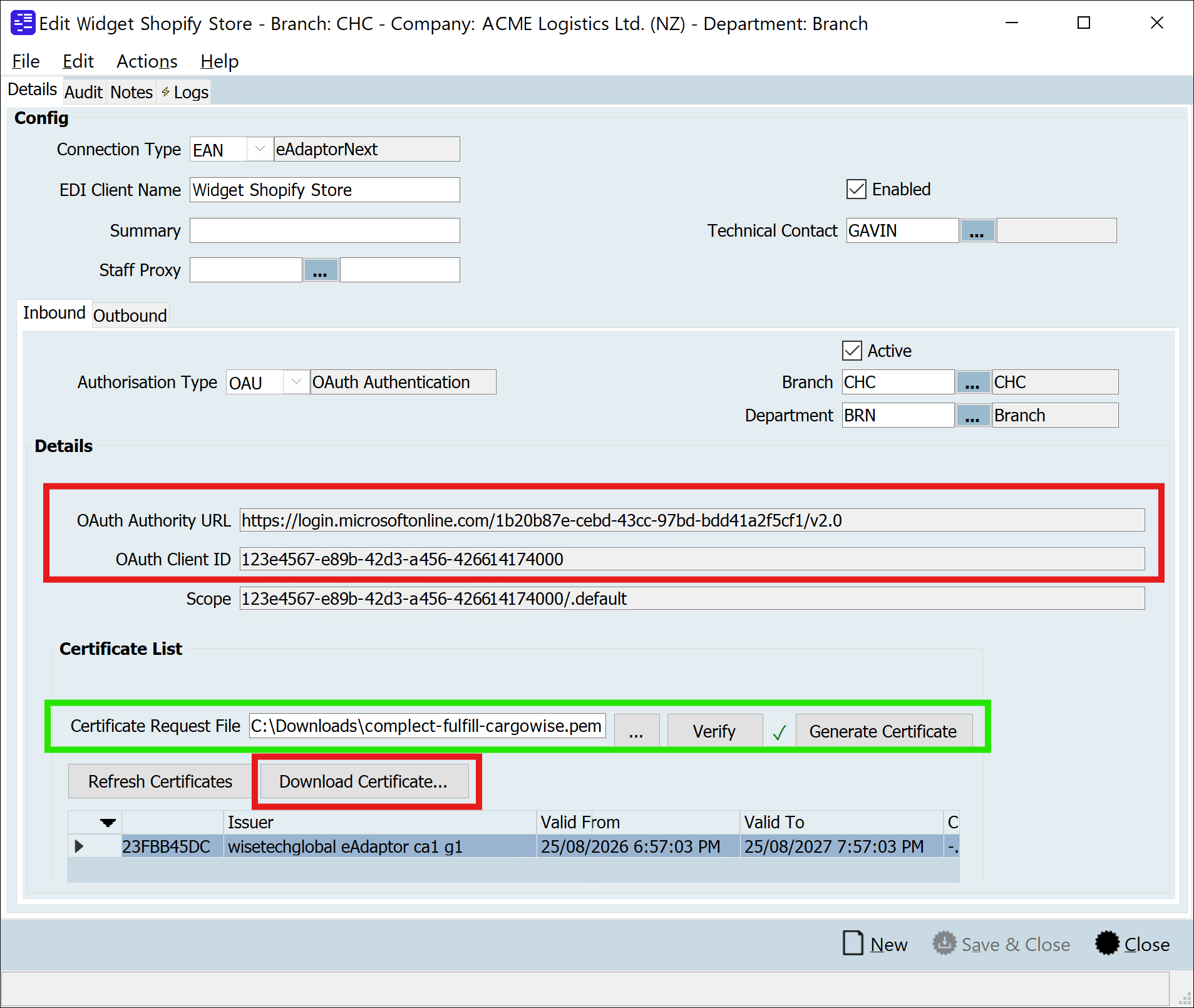
- Tick Enabled in the Config section.
- On the Inbound tab tick Active.
- Set the Authorisation Type to
OAU(OAuth Authentication). - Select the relevant Branch and Department.
Generate the Certificate
eAdaptor Next inbound OAuth uses a client certificate in place of a password or client secret. CargoWise generates the certificate from a Certificate Signing Request (CSR) file supplied by the client that will use the service.
In the Certificate List section of the Inbound tab (the green area in the screenshot above):
- Click the ... button next to Certificate Request File and select the CSR file.
- Click Verify. A green tick is shown once the CSR is verified.
- Click Generate Certificate. The first time a certificate is generated for an EDI Client, CargoWise also creates a new identity in its authentication server.
Provisioning the identity can take a short time to complete. Use Refresh Certificates to update the list.
Once complete, the OAuth Authority URL, OAuth Client ID and Scope fields are populated and the new certificate appears in the certificate list.
Settings
The following details (the red areas in the screenshot above) must be provided to the client so they can connect to CargoWise:
-
OAuth Authority URL - e.g.
https://login.microsoftonline.com/{tenantId}/v2.0 -
OAuth Client ID
-
Certificate - select the certificate in the Certificate List and click Download Certificate... to save it.
The client may also require other details specific to its integration. For example, for warehouse order processing, the client will also need the Organization Code assigned to them and the Warehouse Code orders will be fulfilled from.
Certificates expire (typically after one year). The Technical Contact will be notified ahead of expiry, at which point a new certificate must be generated and provided to the client so they can continue to access the service.
eAdaptor Next Service URL
The eAdaptor Next service URL usually follows this pattern:
https://{identifier}services.wisegrid.net/eadaptornext
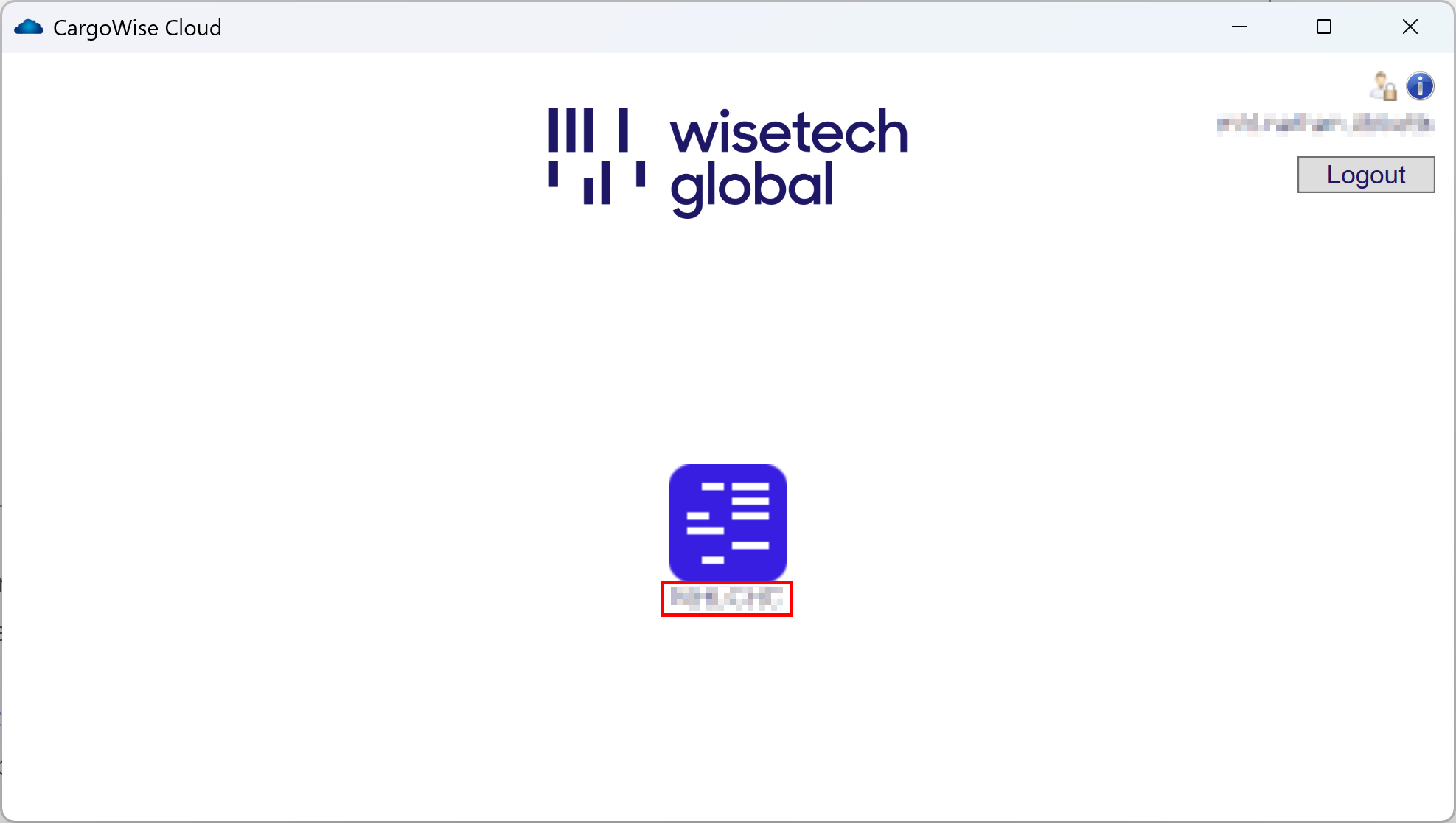
Where {identifier} is replaced with the 6 character CargoWise instance identifier, which is made up of CargoWise's Enterprise Code and Server Code. This can be discovered from the WiseCloud Client beneath the CargoWise instance launch button (see Inbound eAdaptor Service URL below for an example).
If the URL cannot be discovered then you'll need to contact your WiseTech Relationship Manager to arrange this to be setup or provide the URL.
eAdaptor Legacy
The following settings are required by third party services to integrate with CargoWise:
These settings can be found in the CargoWise System Registry, found under Maintain > System > Registry.
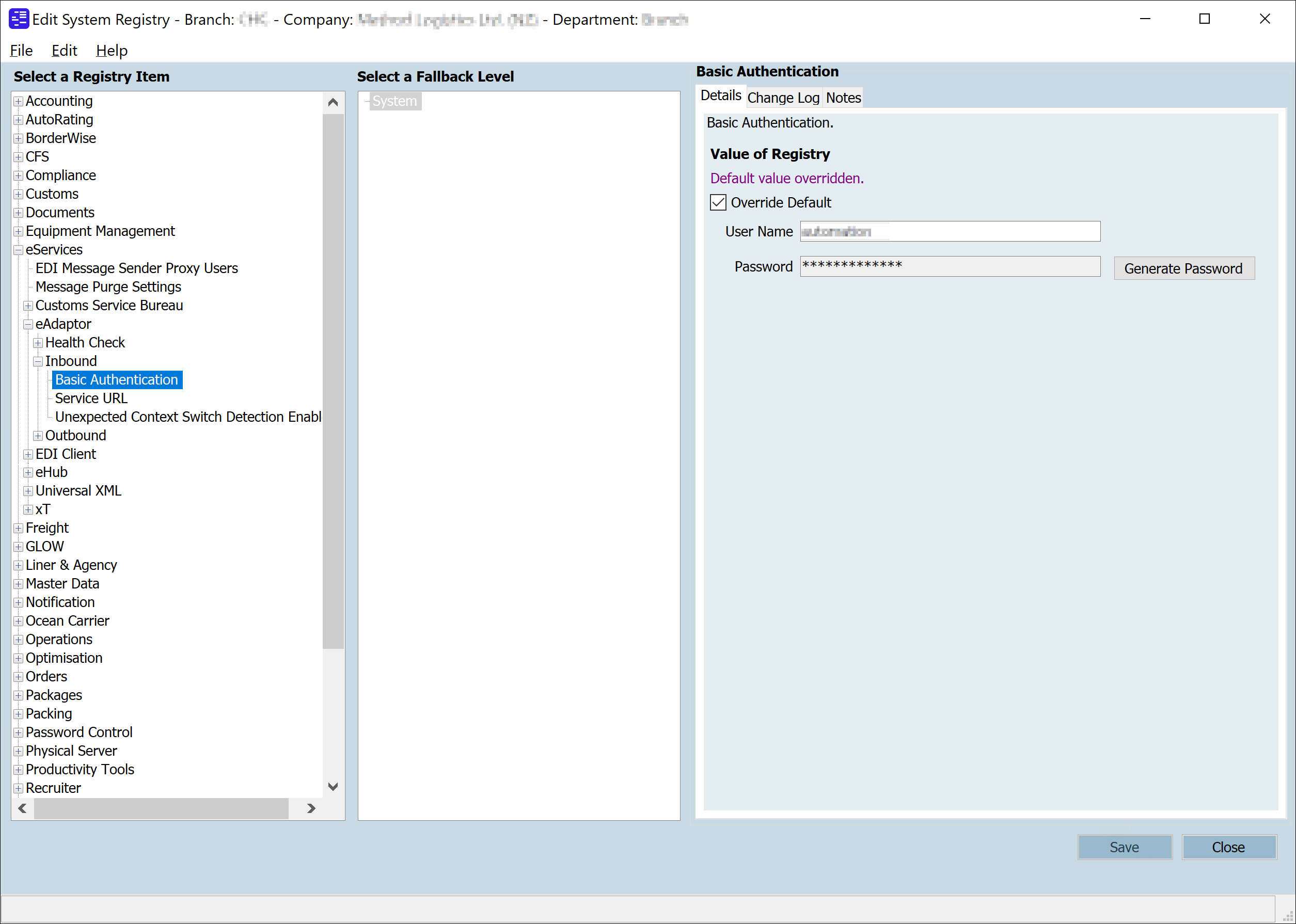
User Name and Password
Under the eAdaptor Inbound Authentications section a User Name and Password must be setup for integrations to use.
Inbound eAdaptor Service URL
A URL may be present in the CargoWise System Registry which can be modified for use. If this setting is empty then a default may be discoverable. Failing that you'll need to contact your WiseTech Relationship Manager to arrange this to be setup or provide the URL.
Under the Inbound eAdaptor Service URL section a URL may be present which can be adapted to use:
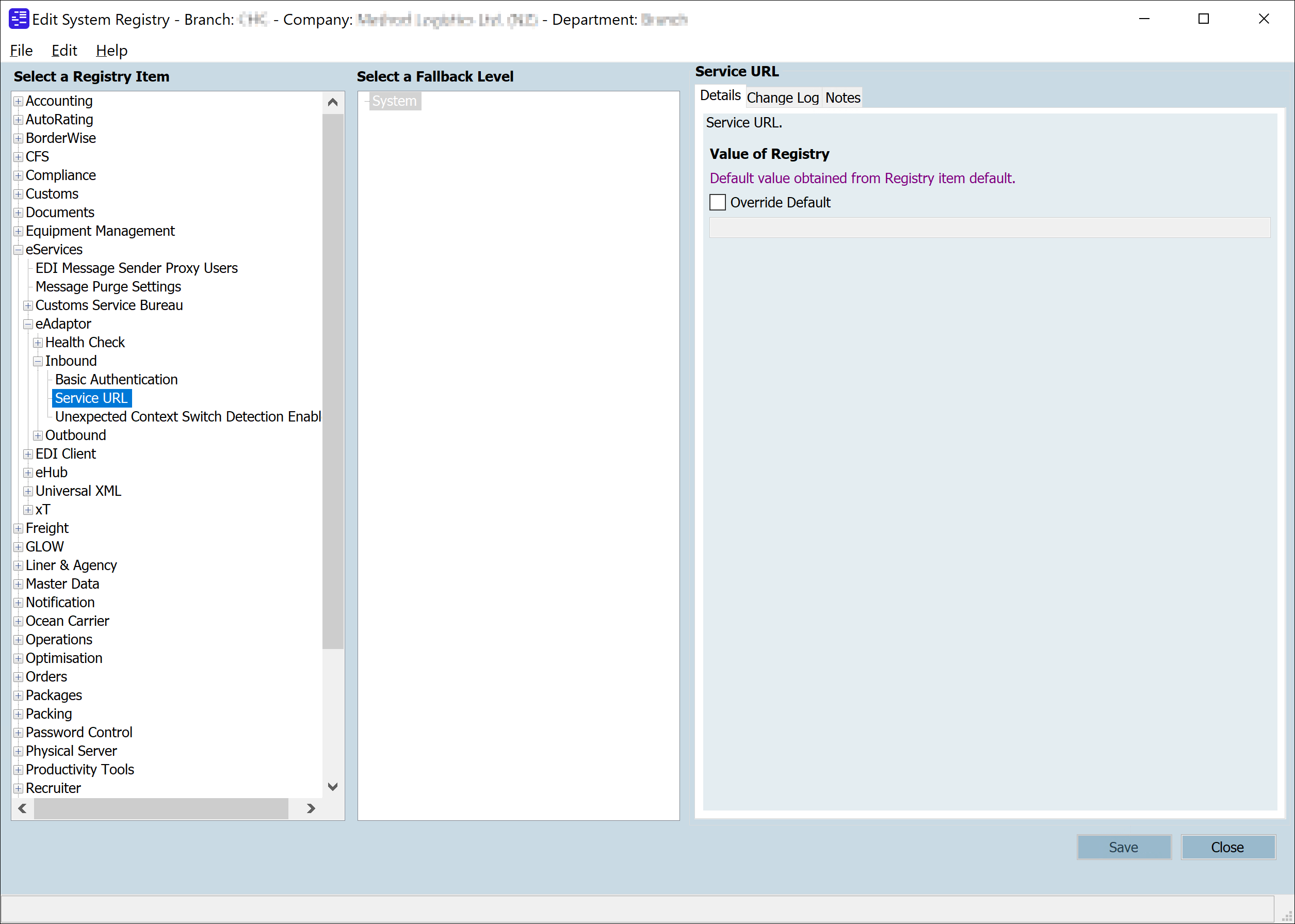
With this url value, everything to the right of the last / can be replaced with eadaptor to provide the required URL. For example: https://xxxtstservices.wisegrid.net/eadaptorstreamedservice.svc becomes https://xxxtstservices.wisegrid.net/eadaptor.
If the setting is empty it's usually possible to find the url using the following pattern:
https://{identifier}services.wisegrid.net/eadaptor
Where {identifier} is replaced with the 6 character CargoWise instance identifier, which is made up of CargoWise's Enterprise Code and Server Code. This can be discovered from the WiseCloud Client beneath the CargoWise instance launch button:
The URL can be tested in a web browser. If it's working you should be challenged with a sign in dialog where you can use the User Name and Password to login.
If the URL cannot be discovered using these techniques then you'll need to contact your WiseTech Relationship Manager to arrange this to be setup or provide the URL.